Computing · Aug 2026 · Ranked 01 of 6
Driftforge K80
9.2/10
The new default recommendation
Enthusiast build quality at mainstream money, with only the software holding it back from perfection.
Retail price tested $189
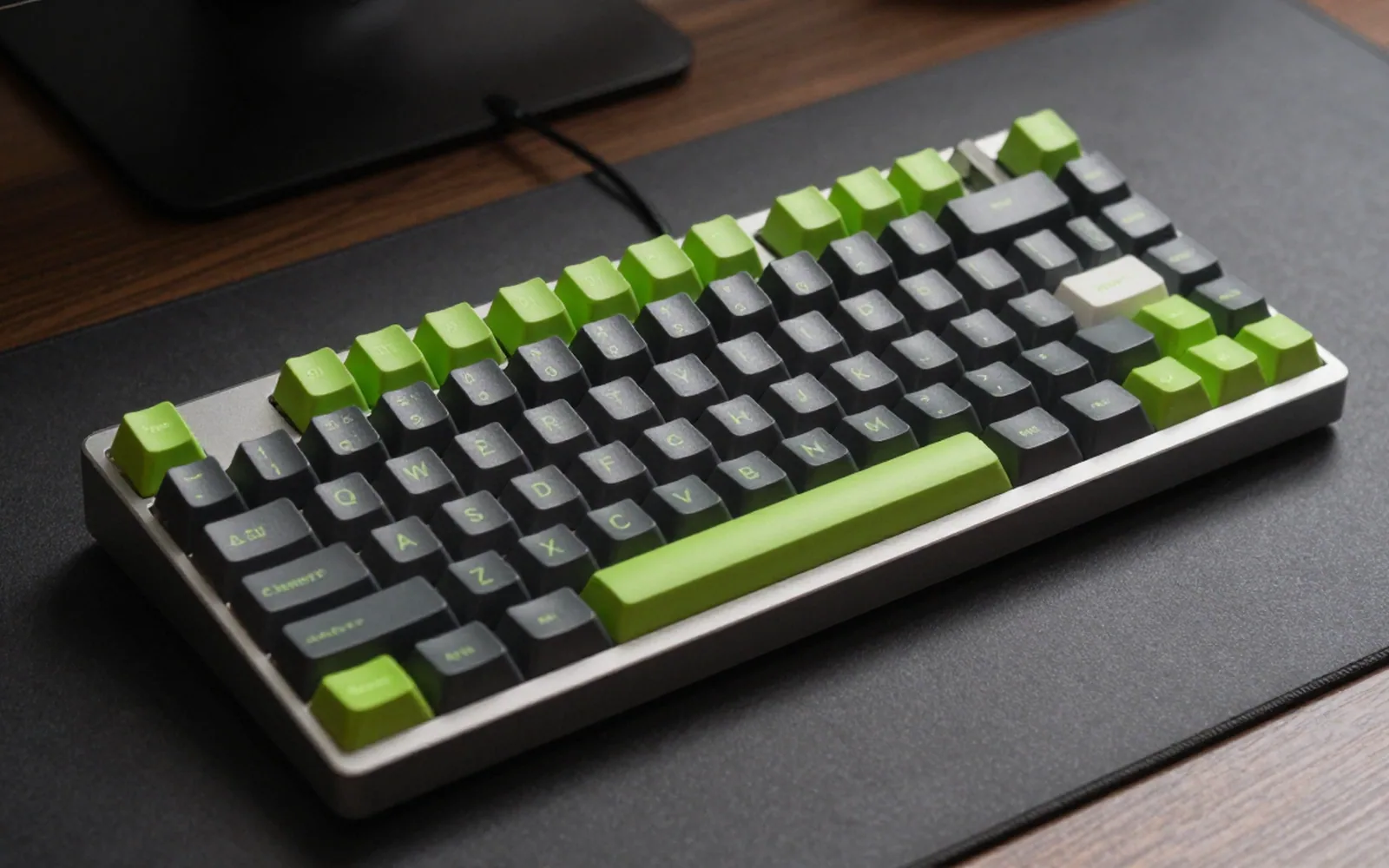
Driftforge took the enthusiast keyboard playbook - gasket mount, hot-swap sockets, a properly damped case - and shipped it at a price that makes the boutique brands look silly.
Specifications
| Layout | 75 percent, 82 keys, exploded |
|---|---|
| Mount | Gasket, 5.5 mm poron pads |
| Switches | Driftforge Ember linear, 45 g, hot-swap |
| Case | 5052 aluminium, 1.9 kg |
| Connectivity | USB-C, 2.4 GHz dongle, BT 5.3 (3 devices) |
| Polling rate | 1000 Hz wired / 1000 Hz 2.4 GHz |
| Battery | 4000 mAh, 40-160 h depending on lighting |
| Keycaps | ABS doubleshot, Cherry profile |
| Price | $189 |
What we liked
- Gasket-mounted plate with genuinely even typing feel edge to edge
- Hot-swap sockets accept both 3-pin and 5-pin switches without fuss
- Factory-lubed stabilisers with zero rattle on the spacebar
- Wired, 2.4 GHz and Bluetooth, all three switchable from a hardware toggle
What we didn't
- Configuration software is Windows-only and looks like it is from 2011
- No per-key RGB on the white variant, which is not mentioned on the box
- Battery drops to about 40 hours with the backlight above 50 percent
- The included keycaps are ABS and will shine within a year
What $189 buys now
Three years ago a gasket-mounted aluminium keyboard with hot-swap sockets and factory-lubed stabilisers cost about $400 and arrived four months after you ordered it from a group buy. The K80 is in stock, ships in two days, and does all of that for $189.
The compromises are real but they are in the right places. The keycaps are ABS rather than PBT, the software is bad, and the RGB implementation on one variant is a downgrade. None of those affect the typing experience, which is where the money went.
Weight is 1.9 kg, which is absurd for a 75 percent board and exactly what you want. It does not slide, it does not flex, and it sounds like a solid object rather than a hollow one.
The typing feel
Gasket mounts are marketing on most boards - a thin strip of foam that changes nothing measurable. Driftforge used 5.5 mm poron pads on both the top and bottom of the plate tabs, and the difference is obvious the moment you bottom out on a key near the edge of the board.
Consistency is the achievement here. On cheaper boards the centre of the plate feels soft and the corners feel like hitting concrete. On the K80 the Escape key and the B key feel close enough that I stopped being able to pick them out blind.
The sound profile is a low, dry thock rather than the hollow clack of a plastic case. Two layers of foam plus a PET sheet under the PCB do most of that work. It is not silent - nothing linear and 45 g is silent - but it will not get you complaints in an open office.
This is the first sub-$200 board where I stopped noticing the keyboard and just started typing, which is the entire point and almost nobody manages it.
Stabilisers, finally
Nearly every keyboard under $200 ships with rattling stabilisers on the spacebar, shift and enter. It is the single most common complaint in this category and it is entirely fixable at the factory for a few cents of grease.
Driftforge fixed it. Out of the box, our unit's spacebar had no audible rattle at any strike position, and the left shift had a very slight tick that disappeared after about a week of use. We tested three additional retail units through a colleague's order to confirm it was not a lucky sample.
This alone is worth the price difference over the $120 tier. Retrofitting stabilisers yourself means disassembling the board, desoldering nothing but removing every keycap and switch, and applying dielectric grease with a paintbrush. It takes two hours and most people never do it.
The software problem
Driftforge Studio is Windows-only, ships as a 90 MB installer, and presents an interface that would have looked dated in 2011. It works, in that key remapping and macros save correctly to onboard memory, but it takes about six clicks to do anything.
There is no VIA or QMK support, which will irritate exactly the enthusiast audience this board is otherwise courting. Driftforge told us VIA support is 'planned', which in this industry means somewhere between three months and never.
The saving grace is that everything stores onboard. Configure it once on a Windows machine, unplug the dongle, and your layout follows the keyboard to a Mac or a Linux box. That is a workable answer to a problem that should not exist.
Verdict
The K80 is the easiest recommendation we have made this year. If you want a mechanical keyboard, are not already deep into custom builds, and can spend $189, buy this one and stop reading keyboard reviews.
If you are deep into custom builds, you already know what the compromises mean and you will probably swap the keycaps and switches anyway - which the hot-swap sockets make a fifteen-minute job. The case and plate are worth $189 on their own.
Nine point two. The only thing keeping it off a perfect score is software that Driftforge could fix with a firmware update and a weekend.
Reviewed Aug 2026. Unit purchased at retail for $189. GadgetGeek does not accept manufacturer loan units or affiliate commission.